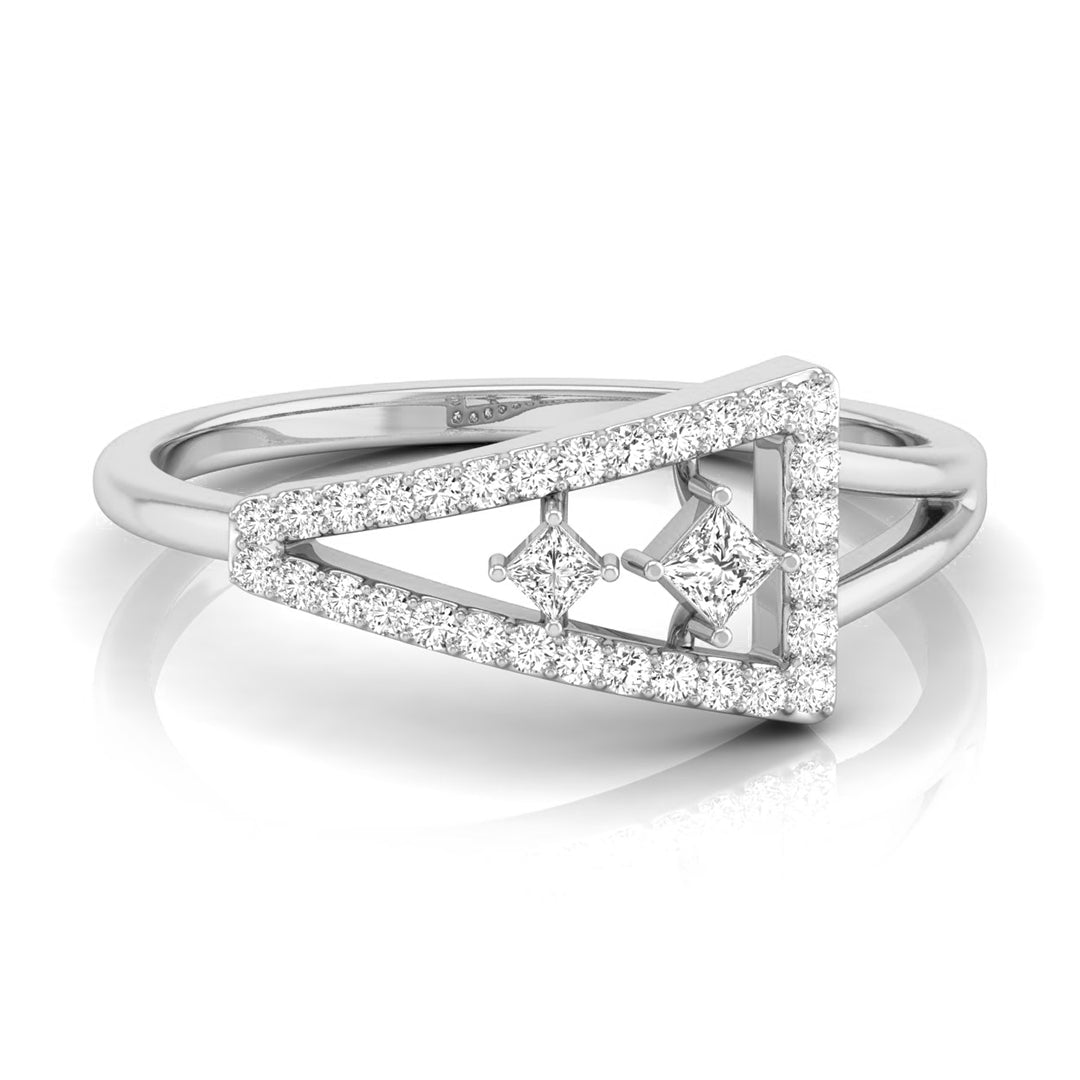


How to Buy Diamond Jewellery Within Your Budget - A Simple Guide for Every Buyer
Introduction
You are scrolling through a jewellery website late at night. You see a diamond ring that takes your breath away. You click on it. You see the price. You close the tab.
We have all been there.
The word "diamond" carries a certain weight. It feels like something reserved for people with unlimited budgets, big bank accounts, and no hesitation at checkout. But that is simply not true, and this guide is here to prove it.

First, Take a Breath - Diamonds Are More Accessible Than You Think
There is a long-standing myth that diamond jewellery is only for the wealthy. Hollywood, advertising, and years of marketing have made diamonds feel out of reach for the average person.
But here is the reality: the diamond jewellery market today is bigger, more competitive, and more consumer-friendly than it has ever been. There are more options, more price points, and more ways to find something genuinely beautiful at a price that works for you.
The key is not to spend more. The key is to spend smarter.
And that starts with understanding just a little bit about how diamonds are actually priced.
What Makes a Diamond Expensive?
You do not need to become a gemologist. But knowing these basics will immediately make you a more confident shopper.
Every diamond is graded on four qualities. Together, they are called the 4Cs. These four things determine the price of every piece of diamond jewellery you will ever come across.
Cut — the most important one. This is about how well the diamond has been shaped. A well-cut diamond catches the light and throws it back at you in the most beautiful way. That sparkle you love? That is all about the cut. Always prioritise this. Even a smaller diamond with an excellent cut will look more impressive than a larger diamond that is poorly cut.
Colour — not as obvious as you think. Diamonds are graded from D (completely colourless) to Z (noticeably yellow or brown). The colourless ones cost the most. But here is something most people do not realise — the difference between a D and a G is almost impossible to see with the naked eye. Once a diamond is set into a piece of jewellery, even trained eyes struggle to spot the difference. So you do not need to pay for the very top of the colour scale.

Clarity — tiny flaws that nobody can actually see. Most diamonds have small natural imperfections inside them called inclusions. A completely flawless diamond is extremely rare and extremely expensive. But a diamond with very minor inclusions — ones that you would need a magnifying glass to find — looks absolutely perfect in real life. You are paying for something nobody will ever notice, including you.
Carat — size matters, but not as much as people think. Carat is simply the weight of the diamond. Bigger carat equals bigger price. But as you will discover shortly, there are very clever ways to make a diamond look larger without actually paying for a larger one.
Understanding these four things already puts you ahead of most first-time buyers. You now know that expensive does not always mean visibly better — and that is powerful knowledge when you are shopping for diamond jewellery.
Step 1: Decide Your Budget Before You Look at Anything
This might be the most important step in this entire guide. And it is also the step most people skip.
Before you visit a single store or open a single website, decide on your budget. Write it down if you need to. Make it a real number, not just a vague idea.
Jewellery stores — both online and offline — are carefully designed to make you spend more than you planned. The lighting is warm and flattering. The displays are arranged to make bigger pieces look irresistible. The language used by salespeople is smooth and persuasive. Walking in without a firm budget is like going grocery shopping when you are very hungry. Everything looks good and your cart ends up full of things you did not plan to buy.
When deciding your budget, think about a few things:
What is the occasion? A pair of small diamond earrings for everyday wear does not need the same budget as an engagement ring. Match your spending to the moment.
What metal do you want? The metal that holds the diamond also affects the total price. Platinum is the most premium and the most expensive. Gold — whether yellow, white, or rose — is a popular and beautiful middle ground. Silver is the most budget-friendly. White gold is a favourite for budget-conscious shoppers because it looks very similar to platinum at a significantly lower cost.
Always add a buffer. There are often extra costs that first-time buyers do not expect. Making charges, which is what the jeweller charges for the craftsmanship involved, can add anywhere from 10 to 25 percent on top of the base price. There may also be taxes, resizing fees, or engraving costs. Always keep a small buffer in your budget for these surprises so they do not throw you off.
Step 2: Use These Smart Tricks to Get More for Your Money
These are the tips that experienced buyers and insiders actually use. They are simple, they work, and they can make a significant difference to what you get for your budget.
Buy just below the popular carat sizes. Diamonds are priced in big jumps at round numbers - 0.50 carat, 1 carat, 1.50 carat, and so on. A 0.90 carat diamond looks virtually identical to a 1 carat diamond when it is sitting in a ring on your finger. But it can cost noticeably less — sometimes 15 to 20 percent less. The same logic applies to other sizes. Going just below the round number is one of the easiest savings you can make when buying diamond jewellery.

Choose G, H, or I colour instead of D, E, or F. As mentioned earlier, the difference between near-colourless and truly colourless is invisible to the naked eye, especially once the diamond is set in metal. If you are choosing white gold or platinum, go for G or H. If you are choosing yellow gold, even an I or J colour looks perfectly white because the warm tone of the gold masks any hint of yellow in the diamond.
Go for VS2 or SI1 clarity. These grades mean the diamond has very minor inclusions that you simply cannot see without professional equipment. In real life, the diamond looks completely clean and beautiful. You save a meaningful amount compared to higher clarity grades, and nobody — not even you — will ever know the difference.
Consider lab-grown diamonds seriously. This deserves a proper mention because it is genuinely a game changer for budget buyers. Lab-grown diamonds are real diamonds. They are not fake. They are not cubic zirconia. They have the same chemical composition, the same physical properties, and the same optical brilliance as diamonds that come from the earth. The only difference is where they were created. And because the process is more controlled and less resource-intensive, they can cost 40 to 60 percent less.
If you want a larger, more impressive piece of diamond jewellery for the same budget, lab-grown is absolutely worth exploring.
Try a halo setting. The setting is the metal frame that holds your diamond in place. A halo setting places a ring of smaller diamonds around your centre stone, making the whole piece look significantly bigger and more glamorous. It is a brilliant design trick that gives you the visual impact of a much larger diamond without the price tag of one.

Time your purchase well. Festive seasons, wedding seasons, and end-of-year sales often bring genuine discounts on diamond jewellery. If your purchase is not time-sensitive, a little patience can save you a surprising amount. Sign up for newsletters from jewellers you like. Follow them on social media. You will often get early access to sales that are not widely advertised.
Step 3: Decide Where to Shop — Online or In-Store?
Both options can work well. It really comes down to your personal comfort level and shopping style.
Shopping in-store gives you the experience. You can hold the piece, try it on, see exactly how it catches the light, and ask questions face to face. For first-time buyers especially, this tactile experience can be very reassuring. The downside is that physical stores carry higher running costs, and those costs get added to the price of the jewellery you buy.
Shopping online gives you convenience and comparison. You can browse hundreds of options, filter by budget, read detailed specifications, compare prices across multiple sellers, and take all the time you need without anyone hovering over your shoulder. Prices are often lower because online jewellers have lower overhead costs. The downside is that you cannot physically examine the piece before it arrives.
If you decide to shop online, here is your checklist:
Only buy from jewellers who provide diamond certification from a recognised laboratory. Look carefully at the return and exchange policy — a minimum of 15 to 30 days is reasonable. Read genuine customer reviews, not just the star rating but the actual written experiences of real buyers. Check whether the listing shows real photos or videos of the exact piece, not just generic stock imagery. Make sure the jeweller has a working customer support channel you can actually reach before you buy.
Always Ask for a Certificate - This Is the One Thing You Must Not Skip
A diamond certificate is an independent document issued by a professional gemological laboratory. It tells you everything about the diamond — its exact cut grade, colour grade, clarity grade, carat weight, measurements, and more. Importantly, it is produced by a lab that has no interest in selling you the diamond. They are purely there to grade it honestly.
The most trusted names in diamond certification globally are GIA (Gemological Institute of America) and IGI (International Gemological Institute). Both are widely respected. In India, always also look for the BIS Hallmark on the metal component of the jewellery, which confirms the purity of the gold or silver used.
Without a certificate, you are essentially taking the jeweller's word for what you are buying. That is a risk not worth taking, regardless of how trustworthy the jeweller seems or how small your budget is. Always ask. A good jeweller will always have one ready.

Questions to Ask Before You Pay
Walking into any purchase armed with good questions puts you in control. Here are the ones that matter most:
Is this diamond certified, and can I see the grading report before I pay? What exactly are the making charges, and are they included in the displayed price? What is your return or exchange policy, and how long do I have? Is the metal hallmarked? Can I get the piece independently valued or appraised?
A jeweller who is confident in what they are selling will answer every one of these without hesitation or irritation. Any reluctance to answer should be a warning sign.
Mistakes to Avoid as a First-Time Buyer
Learning from other people's mistakes is far more comfortable than making your own. Here are the most common ones:
Obsessing over carat size while ignoring cut quality is the single biggest mistake buyers make. A smaller diamond with a brilliant cut will always look more beautiful than a bigger diamond with a poor one. Not comparing prices across at least two or three sellers means you might pay significantly more than you need to. Skipping certification to save a small upfront cost is a false economy that can cost you much more later.
Buying impulsively during a sale without doing your research first leads to regret. And being surprised by making charges — which, again, can be 10 to 25 percent of the total — is something that catches far too many buyers off guard.
You Deserve Beautiful Diamond Jewellery - And You Can Afford It
Here is what this guide comes down to: buying diamond jewellery on a budget is not about compromise. It is about knowledge.
When you understand what actually makes a diamond beautiful versus what just makes it expensive on paper, the whole experience changes. You stop feeling overwhelmed. You start feeling confident. You walk into stores and open websites knowing exactly what to look for and what to walk away from.
Prioritise cut above all else. Set your budget firmly before you start. Use the clever tricks around carat, colour, and clarity. Explore lab-grown diamonds if size and brilliance matter most to you. Always buy certified. And compare before you commit.
Do all of that, and you will find a piece of diamond jewellery that sparkles on your finger, around your neck, or on your wrist — and makes you smile every single time you look at it.

Conclusion
Buying diamond jewellery does not have to feel overwhelming or out of reach. With the right knowledge — understanding the 4Cs, setting a firm budget, choosing certified diamonds, and shopping smart — you can find something truly beautiful without stretching your finances.
Every sparkling piece tells a story. Make sure yours is one you feel good about.
At Aurament, we believe everyone deserves access to stunning, certified diamond jewellery at prices that make sense. Whether you are just beginning your search or ready to make a decision, our collection is designed with real budgets and real people in mind.
Explore Aurament's diamond jewellery collection today — and find the perfect piece that is made for you.